המיזם למוסר יהודי
Jewish Ethics Project
An Orthodox voice rooted in Torah Ethics, dedicated to addressing today’s moral challenges.
Our Principles
The Jewish Ethics Project (JEP) is a challenging, Orthodox, voice for our times — rooted in Torah, committed to kindness, justice and righteousness (Jeremiah 9:23). We believe that every human being is created in the image of God and Jewish life must reflect that through compassion, righteousness, and integrity. A history of trauma must not cloud our moral vision or dull our responsibility to others.
We call on our community to lead with courage: to be self-critical, to uphold the dignity of the vulnerable, and to bring Torah wisdom to today’s urgent ethical challenges.
Ethics of Safeguarding – Responsibility to Speak Out
Kislev 5787 / November 2026
Following the recent publicity surrounding the trial and conviction of Golders Green Rabbi Aaron “Chaim” Halpern on two counts of sexual assault, Chief Rabbi Sir Ephraim Mirvis and a number of other communal leaders have issued important and helpful statements, commending the courage of those who stepped forward to report this abuse, thereby protecting others.
In that spirit, they encourage those who have suffered abuse or witnessed it to speak out, whether by contacting the police directly or seeking support from appropriate communal charities such as Noa, the Clubhouse, JWA, JTeens, Relief or JAMI.
In this context, JEP is publishing a translation of a section of Rav Yuval Cherlow’s 2024 book on Jewish ethics (not yet available in English), For the Ways of God are Upright – Jewish Ethics:
כי ישרים דרכי ה' - אתיקה יהודית -יובל שרלו – ידיעות ספרים שאוהבים.
The section deals specifically with the need to confront sexual abuse perpetrated by those in positions of authority. We are placing the translation in our Ethics of Discourse tab (alongside our podcast with Rav Cherlow on this topic), as Rav Cherlow’s central concern is to show that, in these matters, the Torah demands that victims and bystanders speak out to protect victims, rather than be crushed by those who would prefer silence.
He also writes about the paradox that the emphasis on the great virtue of modesty can lead to unwarranted shame on the part of victims, and that the community must create institutions and structures that respond sensitively, allowing abuse to be confronted decisively while protecting both victims and those who might be falsely accused.
To this end, Rav Cherlow was a partner in establishing the Takana Forum (פורום תקנה) in Israel, which was designed to confront sexual abuse by those in positions of authority. He writes that:
“An inseparable part of the Forum's philosophy is confronting the argument that exposing the abuse existing in the Torah world constitutes a desecration of God's Name. … In truth, the proper guidance is the complete opposite, and these claims are the greatest desecration of God's Name. The Name of the Holy One, Blessed be He, is not desecrated when an oppressed person is rescued from the hand of their oppressor. On the contrary, the Name of the Holy One, Blessed be He, is desecrated when it is claimed that the great reputation of His believers is more important to Him than doing justice and protecting victims. Whereas when, in the Name of the Holy One, Blessed be He, one fights against injustice, shows favoritism to no one—"you shall hear the small and the great alike" (Deuteronomy 1:17)—conducts the struggle while scrupulously observing the laws of malicious speech (lashon hara) and the prohibition against public shaming (halbanat panim) on the one hand, and faithfulness to the Torah's commandment "You shall not stand idly by the blood of your neighbour" (Leviticus 19:16) on the other hand, this is the sanctification of the great Name of the Holy One, Blessed be He (Kiddush Hashem), who commanded us, "And you shall purge the evil from your midst" (Deuteronomy 13:6).”
Download the full essay from Rav cherlow here.

Daniel Greenberg on Thought for the Day - Radio 4
As we were reminded in the book of Ecclesiastes last week, “There is a time for everything”, including “A time to plant and a time to uproot”; “a time to cry and a time to laugh”; “a time for war and a time for peace”. But what if Ecclesiastes is not telling us to choose which time it is? Daniel Greenberg reflects on the dangers of seeing a complex world in simple binaries, and why wisdom may lie in resisting the temptation of certainty.
Click here to hear Daniel Greenberg's full Thought for the Day on Radio 4.
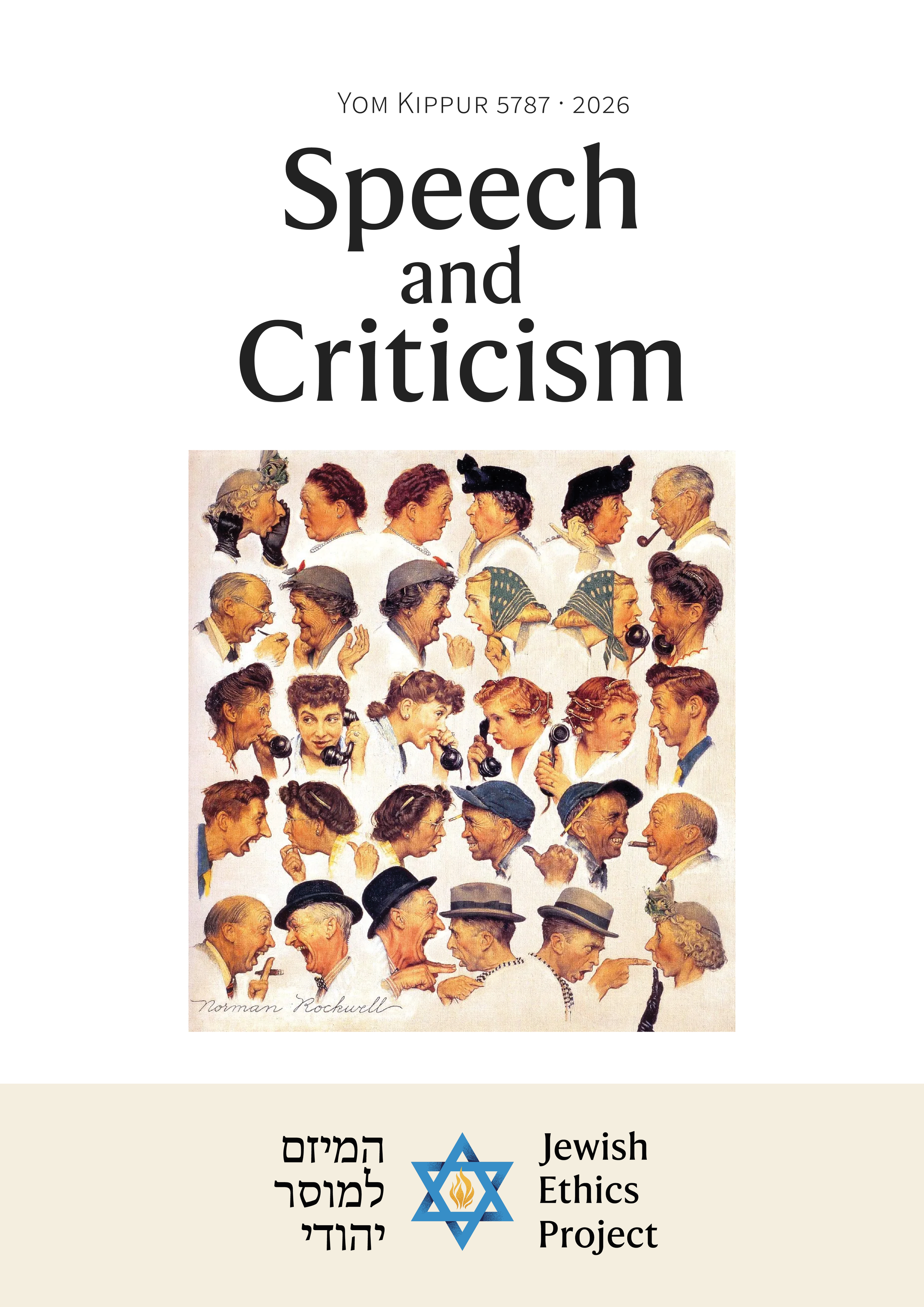
Tishrei 5787 / September–October 2026
In this year’s Yom Kippur booklet, the Jewish Ethics Project explores the power and responsibility of speech at a time when public and communal discourse can so easily become polarised.
Drawing on Torah, rabbinic sources and contemporary Jewish thought, the booklet examines lashon hara, silence, rebuke and the role of constructive criticism. Contributions from Rabbi Professor Sam Lebens, Rabbanit Joanne Greenaway and Rabbi Yuval Cherlow consider how we can develop greater discipline and wisdom in what we say - and what we choose not to say.
The booklet also includes a selection of writings by Chief Rabbi Lord Jakobovits on speech, criticism and Jewish responsibility.
Download the booklet here.
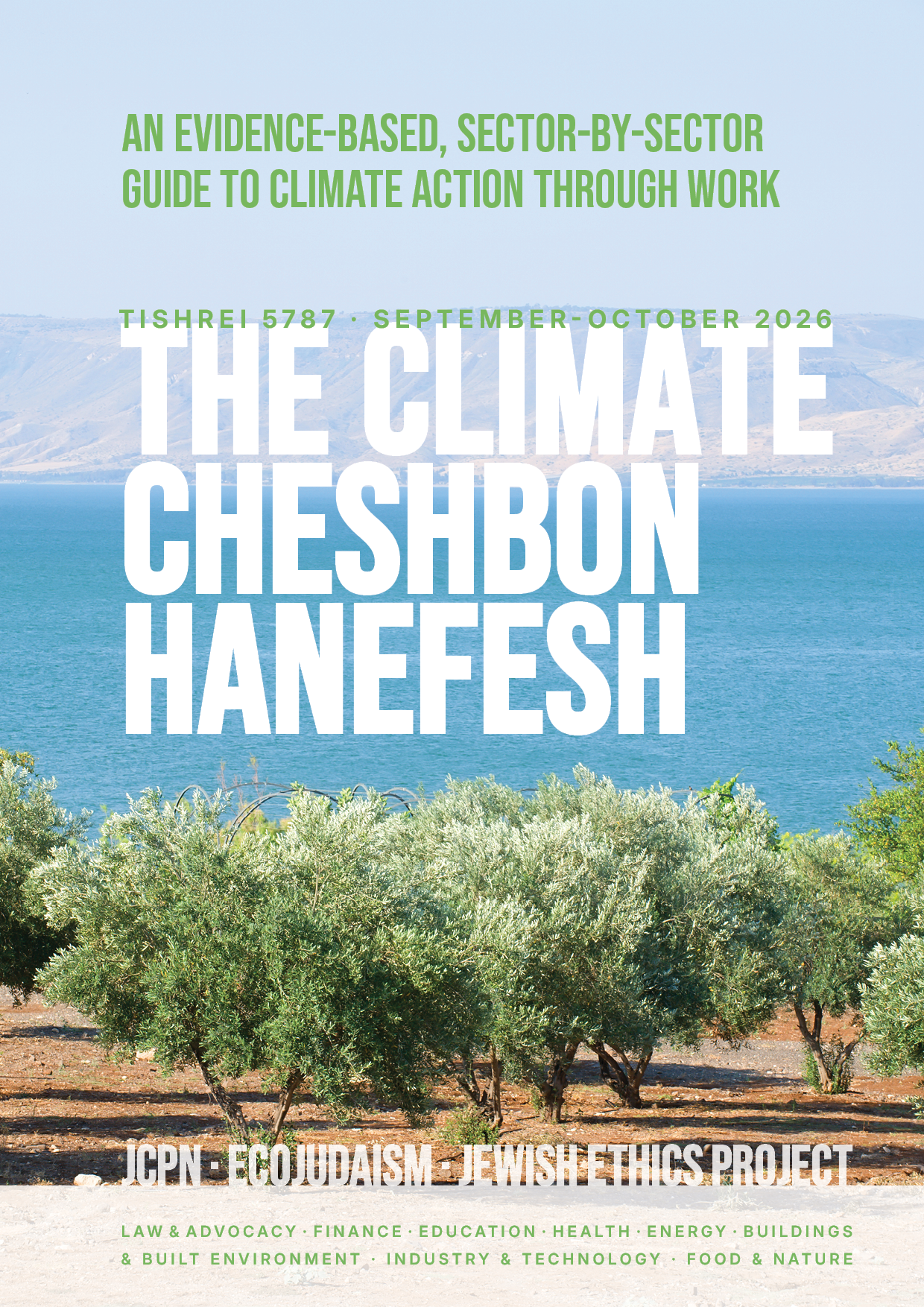
The Climate Cheshbon HaNefesh
An Evidence-Based, Sector-by-Sector Guide to Climate Action Through Work (Tishrei 5787 / September–October 2026)
Produced by EcoJudaism, JCPN, and the Jewish Ethics Project, this booklet invites professionals to bring their work into their High Holy Day cheshbon hanefesh (accounting of the soul). The guide pairs core Jewish imperatives with scientific data and UK sector practices across eight fields: Law & Advocacy, Finance, Education, Health, Energy, Buildings & Built Environment, Industry & Technology, and Food & Nature.
Download the guide here.